
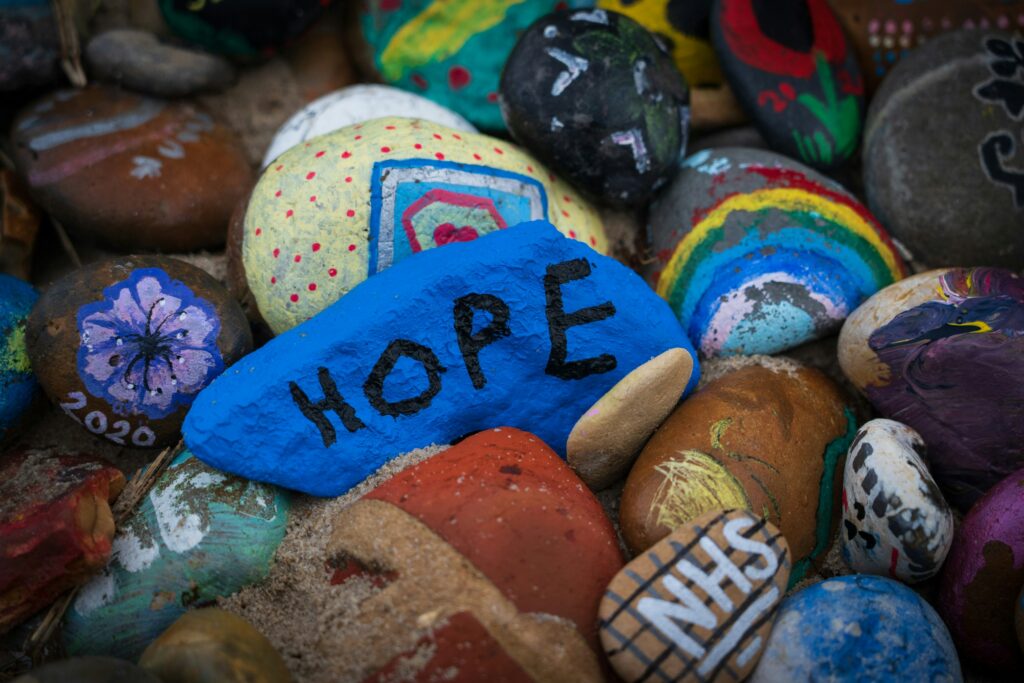
December always invites a moment of pause; a chance to look back at what we’ve overcome, what we’ve learned, and what we’re still holding onto as we close out the year. And for those supporting multilingual learners, this moment feels especially meaningful.
It’s no secret that the climate around immigration and multilingual education has been heavy. Policies shift. Headlines sting. Families carry unseen worries into classrooms. And educators, especially those serving MLs, are navigating it all while trying to build trust, connection, and opportunity for every student.
But here’s what hasn’t changed:
The deep well of expertise, compassion, and everyday commitment educators show up with, not despite the uncertainty, but because of it.
One thing we can always count on is the power of collaboration.
Collaboration to share the load.
Collaboration to problem-solve what’s in front of us.
Collaboration to keep students at the center, even when everything else feels in motion.
So this month, instead of offering a single perspective, we’re sharing Voices From the Field: real stories and real wisdom from educators who are leading with hope and meaningful action.
Because while we can’t control the noise, we can control how we care, communicate, and collaborate.
Why Collaboration Matters (Especially Now)
When classrooms feel stretched, when support feels thin, when educators are juggling more with fewer resources, collaboration isn’t just helpful; it becomes the lifeline.
Research continues to reinforce the same message:
📌 Multilingual learners thrive when content and language teachers work in partnership.
📌 Families stay engaged when all communication is coordinated.
📌 Students succeed when adults share insight, responsibility, and instruction.
Collaboration isn’t a bonus or an add-on. It’s the strategy that holds everything together.
And the educators below show us what that looks like in action.
Voices From the Field
A Letter to Teachers From Sally Diaz
When educator and ML specialist Sally Diaz noticed more and more teachers asking,
“How do I know if what I’m doing is actually working?” she wrote them a letter. One filled with honesty, encouragement, and reminders of the impact educators sometimes forget they make.
We are honored to share her letter in full:
Dear ML Teachers,
For years, many of you have invested your time, energy, and hearts into strengthening your instruction and language-focused teaching practices. You have committed to learning new strategies, refining your craft, and creating classrooms where every student, regardless of language background, has full access to grade-level learning.
Today, I want to remind you of something:
Your work truly matters!
You’re not crazy when you ask yourself, “Are the strategies I’m using actually working?” Teaching multilingual learners is a journey filled with quiet moments that are easily overlooked. But every scaffold, every structured interaction, every language-focused opportunity you create is shaping students’ confidence and sense of belonging.
Success often shows up in subtle ways: a student using a sentence stem on their own, a newcomer joining partner talk, conversations becoming richer, or a hesitant learner sharing an idea they were once afraid to voice. These moments are not accidents; they are signs of your intentional planning and your belief in students’ potential.
Language growth is layered. Students may listen before they speak, label before they explain, or gesture before forming a full sentence. These stages reflect real progress, strengthened by your modeling, routines, and encouragement. Every time you create these opportunities for your ML students, you are giving them access they deserve, building their language, and empowering them to lead in their own learning.
So when teaching feels heavy, or progress seems slow, remember this: your efforts are not in vain, even when the evidence is quiet or small. Your leadership is opening doors and changing lives. Thank you for honoring your students’ languages and cultures, for believing deeply in who they are and who they are becoming, and for showing up day after day.
Muchas Gracias,
Mrs. Diaz
Collaboration in Action — The Springfield Public Schools ELD Team
In Springfield Public Schools (MO), a district with 24,000+ students and a rapidly growing multilingual population, the ELD team has embraced collaboration as both a strategy and a mindset.
Despite being a relatively small department, they are expanding their reach in many ways like:
- Embedding ML Supports into Curriculum Guides
By working directly with curriculum developers, they’ve ensured that Tier 1 supports, scaffolds, and language strategies are baked directly into the planning process, not bolted on later.
- Offering Real-Time, In-Class Support
Teachers planning from the guides can request modeling from ELD specialists, allowing collaboration to happen shoulder-to-shoulder rather than in isolation.
- Merging Professional Learning with Other District Teams
The ELD team partnered with the Cooperative Learning and Active Classrooms teams to unify Step Up training for new teachers. To demonstrate to teachers how the 7 Steps, cooperative learning, and active classroom strategies work together to support all learners.
Their message is clear:
Collaboration doesn’t require a massive staff.
It requires shared vision, intentional structures, and a belief that we’re better together.
From the Bilingual Specialist’s Lens, Rachel Hawthorne: Seeing Language as Students Experience It
One of the strongest reminders we received this month came from educator and bilingual specialist Rachel Hawthorne, who reflected on how classroom structures can unintentionally limit the very linguistic assets we say we value. Her experience highlights why collaboration, shared understanding, and a whole-child view of multilingual learners matter—especially in seasons of uncertainty.
Here are her words:
“For most of my teaching career, I worked in dual language settings, first in a one-way Spanish program and later in a two-way model. What struck me over time was how easily we treat language as isolated, even though our students never experience it that way. In the one-way setting. We were encouraged to keep language instruction ‘pure’: Spanish only during Spanish time, English only during English time. Yet the reality for those students, who were thinking, processing, and living in both languages in their everyday lives, was far more fluid. In many ways, we were unintentionally recreating the same monolingual expectations we critique in English-only spaces—just in the opposite direction.
When I transitioned to a two-way program, the shift was immediate. This model included both native and non-native Spanish speakers in the same classroom, which meant instruction had to consider the non-native speaker in not just one but both language instructional blocks. One could no longer pretend that only one language existed at a time. Translanguaging moved from something to restrict to something to leverage. Teachers now had to plan with both languages in mind when teaching English or Spanish in order for instruction to be meaningful and engaging for every learner—not as two competing systems, but as interconnected ones. The difference was striking: students grew in confidence, curiosity, and genuine pride not just in English or Spanish, but in the ability to move between them with purpose. They were no longer reprimanded for using ‘the other language,’ but instead guided to focus on the target language while still being allowed to draw on all of their linguistic resources to make meaning, solve problems, and express what they knew.
Our multilingual students don’t leave pieces of themselves at the doorway of a language block, a testing window, or a content area. Whether you teach in a dual language setting or a general education classroom, remember that another language is always present and deserves to be acknowledged, even if it isn’t spoken out loud. And when it is, it should be a source of pride, not of shame. Acknowledging and honoring the linguistic reality our students bring is the very bridge that unlocks comprehension, participation, and true belonging.”
Rachel’s perspective reminds us that language is not a subject—it’s a lived experience. And when schools collaborate across roles, content areas, and systems to honor that reality, multilingual learners aren’t just supported; they are empowered.
A Note on Motivation: What We Do Know
When the year feels demanding, or the environment feels unsteady, here’s what we can hold onto:
- Collaboration strengthens classrooms.
- Small steps still matter.
- Language learning takes time, and every scaffold builds the path forward.
- We are never doing this work alone.
In times of uncertainty, collaboration is both a strategy and a source of hope.
Because collaboration doesn’t end in December.
It’s how we move forward, together.