There’s something energizing about gathering in a room with people who care deeply about the same work.
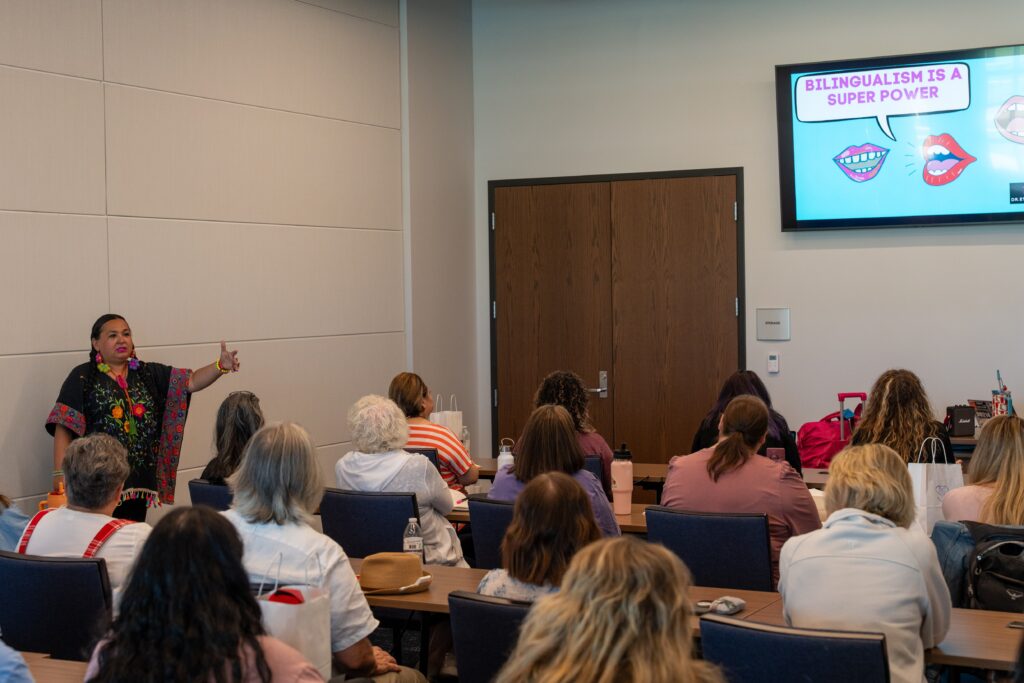
At this summer’s EduSkills Building Bridges conference, educators, leaders, and experts came together to talk about multilingual learners. Not only where we are right now, but where we’re headed next.
There were new ideas to consider, new tools to explore, educators to celebrate, and plenty of conversations we’re still thinking about.
And maybe that’s the best thing about a conference like this. The real impact isn’t what happens in one day. It’s what we carry with us when we return to our schools, districts, classrooms, and communities.
As we look toward the school year ahead, one theme feels especially important: connection. Connection between schools and families. Between data and instruction. Between educators and the tools that support their work. And, ultimately, between multilingual learners and the opportunities they deserve.
When Access Creates Agency
Family engagement has always been an important part of supporting multilingual learners. But meaningful engagement is about more than sending information home or inviting families to school events.
It’s about making sure families have the information and access they need to be active participants in their child’s education.
Research on family-school partnerships increasingly emphasizes this distinction. Strong family engagement isn’t simply about asking families to participate. It’s about helping parents and caregivers become informed, confident partners who have a voice in their children’s learning. That requires accessible information, meaningful two-way communication, and opportunities for families to understand what is happening academically throughout the year (not just at report card time).
This is one area where EduSkills is expanding its Family Engagement and Parent Portal options. Families using the service will now have access to a phone app where they can follow their student’s academic progress while also accessing family engagement curriculum and resources.
The technology itself is only part of the story. The bigger opportunity is what access can create.
When families can more easily understand how their child is doing, they are better positioned to ask questions, celebrate growth, recognize challenges, and participate in decisions about learning.
Access creates opportunities for agency. And agency can help turn school-family communication into a true partnership.
Making the Work Easier to Navigate
That same idea—putting useful information into the hands of the people who need it—shaped several other updates shared at Building Bridges.
EduSkills has introduced customizable dashboards and exports along with UX/UI updates across Title III/LIEP tools, classroom instructional supports, the admin tab, and a new file transfer hub. The EduSkills Translate App also expands options for communication across languages.
More updates are on the way, including expanded FAQ and Knowledge Base resources, a test score transfer service, data analytics services, and additional parent communication app features.
It’s a lot of technology, but the goal behind it is much simpler. Educators and administrators already have a tremendous amount of information available to them. The challenge is making that information easier to find, understand, share, and use.
Because data is most valuable when it helps someone make a better decision. A resource matters when an educator can actually use it. And communication tools matter when they make it easier for people to connect.
As the new school year begins, that is the kind of progress worth pursuing: not adding more for the sake of more, but removing friction from the work that already matters.
Celebrating the People Behind the Progress
Of course, no system or technology transforms a student’s educational experience on its own. People do.
One of the highlights of Building Bridges was the 2026 Multilingual Educator of the Year ceremony, recognizing educators whose commitment to multilingual learners is making a difference in their schools and communities.
This year, EduSkills was proud to recognize Rachel Fulks of Claremore as Multilingual Administrator of the Year, James Johnson of Piedmont as Multilingual Teacher of the Year, and Kristy Hostler of Claremore as Multilingual Paraprofessional of the Year.
We also celebrated an incredible group of finalists whose work represents what multilingual education looks like every day: advocating, collaborating, teaching, communicating with families, removing barriers, and helping students recognize their own strengths.
Technology can make information more accessible. Strong systems can make collaboration easier.
But it is educators who turn those tools into opportunities for students. And that is always worth celebrating.
The Conversation Continues
Building Bridges also allowed us to learn from an extraordinary group of voices in multilingual education.
Keynote speaker Montserrat Garibay joined presenters Daniel Nash of Summit K12, Merica Clinkenbeard of NAELPA, Dr. E.T. & Company, Dr. David Holbrook, Genevieve Olvera, Monique Henderson, and Sally Diaz to share their experiences, expertise, and ideas with our community.
We couldn’t possibly fit everything we learned into one article, and we don’t plan to try. In the months ahead, we’ll continue sharing ideas and perspectives inspired by these speakers and the conversations that began at Building Bridges. Consider this the beginning, not the recap. There is much more to come.
Building Bridges All Year Long
A new school year always brings new priorities, new students, new challenges, and new possibilities.
It’s easy to focus on what needs to be implemented, measured, completed, or improved.
But underneath all of that is something much more human.
Families want to understand and participate in their children’s education. Educators want information and tools that help them do their jobs well. Students want to learn in places where they are known, supported, and given opportunities to succeed.
Those connections are what make the systems around them matter.
Building bridges isn’t something we do once a year at a conference. It’s the work educators do every day—between schools and families, data and instruction, language and learning, and students and opportunity.
And that feels like a pretty good place to begin the year.