by Dr. David J Holbrook
If you were eagerly looking forward to the third of a three-part series of articles exploring how schools and school districts can use Title I, Part A funds to provide services and supports to English learners (ELs), my apologies. You’ll have to wait for that article until next month. I’ve postponed the Title I funding article because of some urgent news related to events at the national level that I thought was a higher priority to share.
OELA is being dissolved
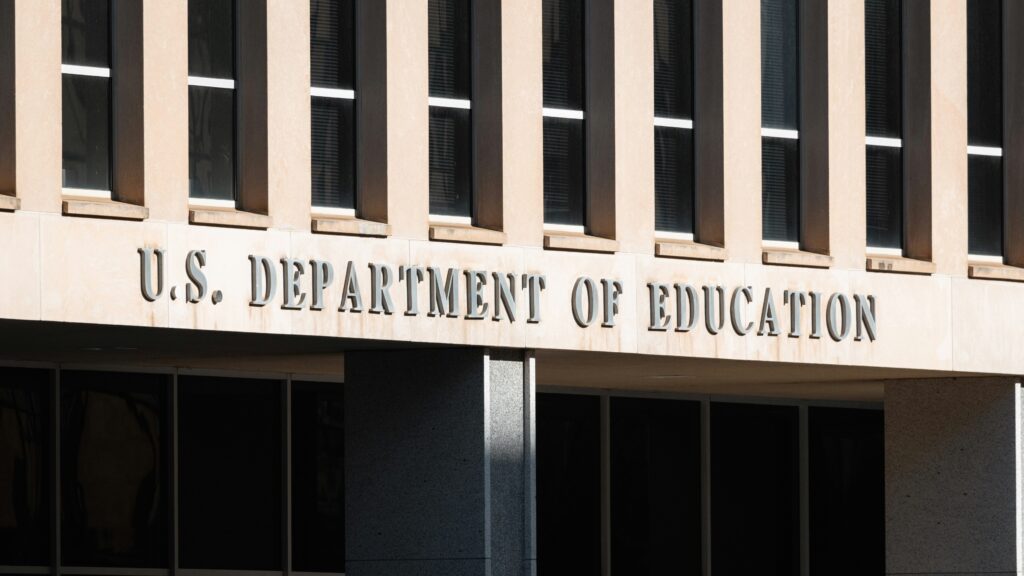
If you haven’t heard, one of my positions is the Executive Director for the National Association of English Learner Program Administrators (NAELPA). During NAELPA’s April Executive Board meeting, the acting head of the U.S. Department of Education (USED), Office of English Language Acquisition (OELA) read prepared remarks that announced that the USED was eliminating OELA as of May 14th and scattering its responsibilities across other offices in USED and other agencies. This was a shock and surprise to everyone present since it requires USED to notify the U.S. Congress of changes like this at least 90 days in advance. That letter, which has only recently been obtained, was sent on February 13th to leaders in the U.S. Senate and U.S. House committees responsible for education and included some information regarding what is happening to OELA’s responsibilities.
What are OELA’s responsibilities?
OELA’s responsibilities included carry out the requirements found in Title III of ESEA/ESSA. This involved administering the Title III English learner and Immigrant formula grant programs, the National Professional Development Grants (NPD), the Native American and Alaska Native Children in School Grants (NAM), and the National Clearinghouse for English Language Acquisition (NCELA).
What happens to those responsibilities now?
The letter sent to Congress indicates that the Title III formula grants will be relocated to the Division of State Support and Accountability (SSA). The reason provided, which included some inaccuracies, is “Many of the functions related to Title III-A, such as accountability, assessment, data, and allocations are currently administered out of this Division, and fully returning Title III-A to SSA will better facilitate operations, communication and support to states.” With the passage of the Every Student Succeeds Act (ESSA) in 2015, except for the function of allocations, the other functions mentioned as part of Title III-A were actually moved into Title I. There are no requirements in Title III-A related to accountability for ELs, English language proficiency assessments, or EL data tracking and reporting. In addition, it has been reported that the unit that Title III is being moved into in the SSA Division is the Special Populations Unit, which currently administers the programs for students experiencing homelessness, students in foster care, and students in neglected and delinquent facilities. While these student groups are at-risk students, given the significant requirements in Title I related to ELs, it would seem to be a better alignment to move Title III into the unit that includes Title I.
On top of this, significant requirements related to the allocation of Title III funding to states are being moved to the Department of Labor via an Interagency Agreement. This will require states and recipients of other grants from USED to make sure that they are able to receive funds from the Department of Labor since it uses a separate funding distribution method than USED.
The letter to Congress also outlined that the National Professional Development Grants (NPD), are being moved to the Office of Effective Educator Development Programs and the Native American and Alaska Native Children in School Grants (NAM) are being moved to the Office of Indian Education in the Department of the Interior. The National Clearinghouse for English Language Acquisition (NCELA) was not mentioned in the letter, but the remarks provided to the NAELPA Executive Board indicated that NCELA will be still be administered by contract.