When educators think about language development, it can be tempting to view it as something separate from academic learning.
Language instruction happens here. Content instruction happens there.
But research and classroom practice tell a different story.
Multilingual learners develop language most effectively when they use it for meaningful purposes, such as solving problems, discussing ideas, reading complex texts, and engaging with grade-level content. Language is not something students learn first and use later. It develops through authentic use.
This idea is at the heart of Content-Based Language Instruction (CBLI), an approach that integrates language development within academic content rather than teaching language in isolation.
As schools continue to look for ways to support multilingual learners, understanding this distinction matters. Effective language instruction is not about finding more time to teach language separately. It is about intentionally weaving language development into the learning experiences students already have every day.
Why Language Shouldn’t Be Taught in Isolation
For many years, language instruction often focused on vocabulary lists, grammar exercises, and isolated language skills.
While these tools can have a place, they are not enough on their own.
Think about how language works in the real world. We don’t learn language by memorizing words disconnected from meaning. We learn language by using it to communicate, explain, question, persuade, and make sense of new ideas.
The same is true for multilingual learners.
Students build language when they have opportunities to:
- Discuss a science investigation
- Explain a math strategy
- Analyze a historical event
- Respond to a text
- Collaborate with classmates
In these moments, language becomes a tool for learning rather than a separate subject to master.
Research consistently shows that multilingual learners benefit when language development and content instruction happen together. Rather than waiting until students become proficient in English, effective classrooms provide access to grade-level learning while simultaneously supporting language growth.
Language and Content Go Hand in Hand
One of the most important shifts in multilingual education has been moving away from the idea that students must learn English before they can engage with rigorous academic content.
Instead, educators increasingly recognize that language develops through participation in meaningful learning.
When students are actively using language to engage with content, they are building:
- Academic vocabulary
- Background knowledge
- Communication skills
- Confidence
- Content understanding
All at the same time.
This integrated approach benefits students because language is always connected to purpose. Students are not simply practicing language; they are using language to learn.
That distinction matters.
Another important implication of this work is that language development is not the responsibility of one teacher alone.
Every Teacher Supports Language Development
Multilingual learners spend most of their day in content-area classrooms. They encounter different types of language in math, science, social studies, electives, and English language arts.
Each classroom presents opportunities for language growth. But this does not mean every teacher needs to become an ESL specialist. It does mean that every teacher can make language more visible, interactive, and engaging.
Simple instructional moves can have a significant impact:
- Modeling academic language
- Providing and using sentence stems
- Using visuals and graphic organizers
- Creating opportunities for structured discussion
- Clearly defining both content and language goals
These strategies support multilingual learners while benefiting many other students as well.
What Effective Language Instruction Looks Like in Practice
When language development is integrated into instruction, classrooms often look different than people expect.
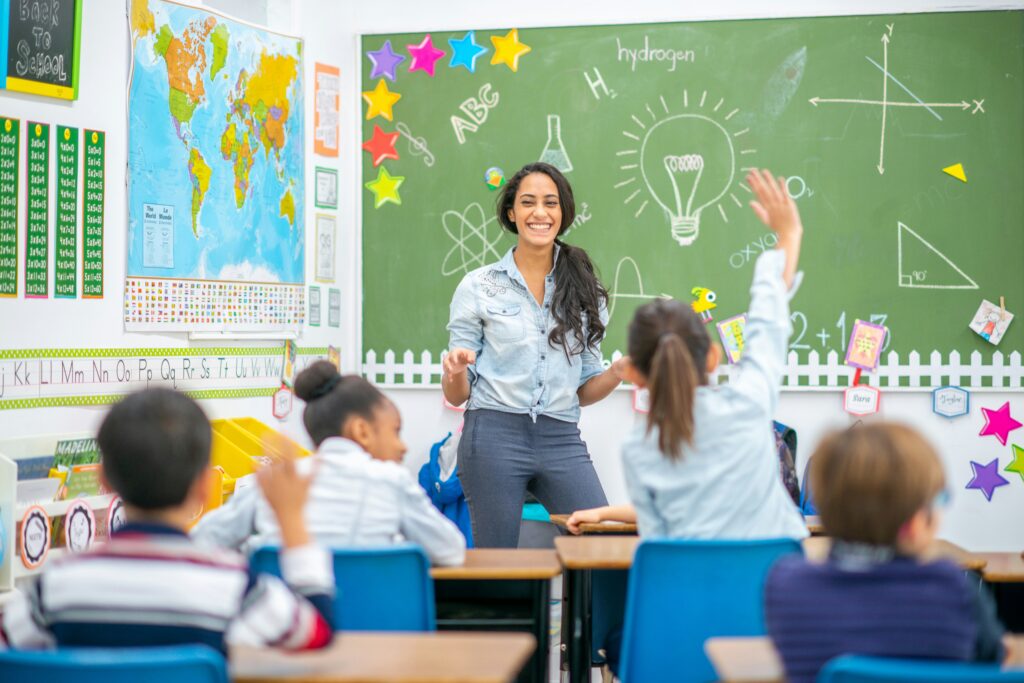
You might see students discussing ideas before writing, teachers explicitly modeling how to explain reasoning or support an argument, sentence frames posted alongside content objectives, students using visuals, gestures, first languages, and peer conversations to process complex concepts.
Effective language instruction often includes:
Explicit Content and Language Objectives
Students understand not only what they are learning, but also how they will use language during the lesson.
Opportunities for Structured Academic Talk
Students learn language by using it. Purposeful discussion allows them to practice vocabulary, clarify thinking, and develop confidence.
Listening, Speaking, Reading, and Writing Across Content Areas
Language development is not confined to one block of the day. It happens throughout instruction.
Strategic Use of Students’ Home Languages
Students’ first languages are assets. When students can draw upon their full linguistic repertoire, they are often better able to access content and make connections.
Scaffolds That Promote Independence
Visuals, sentence stems, graphic organizers, and modeling help students access learning while building the skills they need to work more independently over time.
A Mindset Shift
Perhaps the most important takeaway is that effective language instruction is not an add-on. It is not a separate program, worksheet, or intervention.
It is a way of thinking about instruction.
It begins with the understanding that multilingual learners do not need to wait to participate in meaningful learning experiences. They need opportunities to engage with grade-level content while receiving the language support necessary to succeed.
When educators intentionally connect language and learning, they create classrooms where multilingual learners can fully participate, contribute, and grow.
Language Develops Through Learning
As schools reflect on instructional practices and plan for the year ahead, it is worth revisiting a simple question:
Are students learning language in isolation, or are they learning language through meaningful learning experiences?
The answer matters. Because effective language instruction is not about finding time to teach language separately from learning. It is about recognizing that language develops through learning.
Every discussion.
Every explanation.
Every question.
Every opportunity to think, speak, read, and write.
When language and content are intentionally connected, multilingual learners gain access to both.