
One of the most interesting stories of this year’s World Cup hasn’t only been what happened on the field.
It’s been watching the world experience the United States through fresh eyes.
Fans have fallen in love with everything from regional foods and roadside attractions to small-town hospitality and local traditions. Norway’s Erling Haaland made headlines not just for his play, but for embracing the quirky side of America—posing with a designer bag, cowboy boots, and perhaps the most talked-about souvenir of the tournament: a taxidermied raccoon from Texas.
It has been funny, unexpected, and surprisingly heartwarming.
Because when people experience a new place for the first time, they notice things the rest of us have stopped seeing.
- A yellow school bus.
- A waitress who keeps refilling your drink.
- A state fair.
- Fireflies.
- The way strangers strike up conversations in line.
Culture isn’t only found in famous landmarks or major events. It’s found in the ordinary moments that locals rarely think to explain.
And that has a lot to teach us about multilingual learners.
Every day, multilingual learners walk into classrooms experiencing school with those same fresh eyes. They are learning not only a new language, but also a new culture—one classroom routine, lunch procedure, group activity, and hallway expectation at a time.
Seeing School With Fresh Eyes
If you’ve ever traveled somewhere new, you’ve probably had a moment when you thought:
“How was I supposed to know that?”
Maybe it was figuring out public transportation, ordering at a restaurant, or understanding an unwritten custom. None of those things is especially difficult once someone explains them. But when everyone around you seems to know the rules already, it’s easy to feel uncertain.
That’s part of what has made watching this year’s World Cup so much fun. Visitors have shared stories about discovering everyday American life, from navigating a Waffle House menu to marveling at Buc-ee’s, yellow school buses, and even the way strangers strike up conversations. It’s a reminder that what feels ordinary to one person can be completely new to someone else.
School is no different.
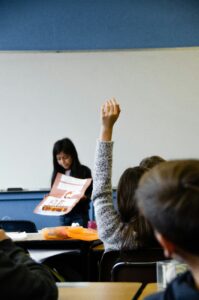
For many students, the routines of school feel almost automatic. They know when to raise a hand, what “turn and talk” means, how to sit criss-cross-applesauce, how to line up for lunch, and what teachers expect during group work. They’ve spent years learning not just the academic content, but also the culture of school.
For multilingual learners, especially newcomers, that same school can feel like an entirely new world.
They’re learning English, certainly. But they’re also learning classroom routines, school traditions, social norms, and the countless unwritten expectations that shape a typical day. Even something as simple as “find a partner,” “grab your Chromebook,” or “show your work” may require cultural understanding in addition to language.
What feels obvious to everyone else may be something they’ve never experienced before.
And that doesn’t mean they’re behind. It simply means they’re seeing school through fresh eyes.
The Hidden Rules of School
One of the most enjoyable parts of following the World Cup has been hearing visitors share the little things no one thought to explain.
- How do you order at a Waffle House?
- Why does everyone get so excited about Buc-ee’s?
- Why do strangers start conversations in line?
None of these is difficult to learn. They’re simply part of the culture. Most Americans don’t even think about them because they’ve always known them.
School has hidden rules, too.
They’re woven into every part of the day, often so naturally that we forget they’re being learned.
Students are expected to know how to ask for help without interrupting. They learn what it means to “show your thinking,” how to work with a partner, when it’s appropriate to ask questions, and how different classrooms operate. They pick up on unwritten expectations about participation, collaboration, organization, and even hallway etiquette.
For students who have spent years in the same school system, these routines often become second nature.
For multilingual learners, they’re another language to learn.
When educators make those hidden rules visible by modeling expectations, explaining routines, using visuals, and giving students opportunities to practice, they’re doing much more than helping students navigate the school day.
They’re making learning more accessible.
Because when students don’t have to spend their energy decoding the culture of the classroom, they can spend more of it engaging with the learning itself.
What if we looked at our classrooms with fresh eyes, too?
Creating a Sense of Belonging
One of the things that has stood out during the World Cup is the way host cities have embraced visiting fans.
Across the country, communities have welcomed supporters from around the world with celebrations, local traditions, and simple acts of hospitality. People may cheer for different teams, speak different languages, or come from different backgrounds, but they’re invited to be part of the experience.
The best classrooms send that same message.
Belonging doesn’t happen because everyone shares the same language or background. It grows when students feel welcomed, valued, and included from the moment they walk through the door.
For multilingual learners, that can be as simple as hearing their name pronounced correctly, seeing their home language represented in the classroom, having opportunities to share their experiences, or knowing there is a trusted adult who believes they belong.
Research consistently shows that a strong sense of belonging supports both academic engagement and language development. When students feel psychologically safe, they are more likely to take risks, ask questions, participate in discussions, and use language in meaningful ways.
Creating that kind of classroom doesn’t require elaborate programs or expensive resources.
It often begins with everyday choices like:
- The books we place on our shelves.
- The examples we include in our lessons.
- The languages we celebrate.
- The questions we ask.
- The ways we invite every student into the conversation.
Because before students can fully engage in learning, they need to know they belong.
Curiosity Instead of Assumptions
One of the best parts of traveling is realizing how much there is to learn.
Visitors ask questions because they want to understand. They notice details that locals overlook. They laugh at the things that surprise them. They observe before they assume.
What if we approached our classrooms with that same sense of curiosity?
When a multilingual learner hesitates before answering, curiosity asks, “What might be happening here?”
When a student doesn’t immediately understand a classroom routine, curiosity wonders, “Have I made the expectation visible?”
When a family isn’t familiar with school procedures, curiosity asks, “How can we make this information more accessible?”
Curiosity shifts our perspective.
Instead of asking, “Why doesn’t this student know this?” we begin asking, “What experiences might they be bringing with them?”
Instead of wondering, “Why isn’t this family participating?” we ask, “Have we created opportunities that feel welcoming and accessible?”
Those questions don’t lower expectations. They help us remove barriers.
And often, the smallest moments of curiosity lead to the biggest shifts in belonging.
When We Notice More, Students Can Learn More
Looking at our classrooms through fresh eyes doesn’t mean starting over.
More often, it means noticing the things we’ve stopped noticing. The directions we assume everyone understands. The routines we no longer think to explain. The academic language that feels second nature to us but may be entirely new to someone else.
When we pause to make those invisible parts of school visible, we make learning more accessible.
Maybe it’s modeling what a classroom discussion sounds like before asking students to jump in. Or pairing visuals with new vocabulary, giving students time to talk through an idea with a partner, or inviting them to draw on their home language as they make sense of new learning.
These aren’t dramatic changes. They’re often the smallest changes that make the biggest difference.
And together, they communicate something powerful:
You belong here. We’re going to help you understand not just what we’re learning, but how we learn together.
When students don’t have to spend as much energy decoding the classroom culture, they have more energy for curiosity, collaboration, and learning.
The goal isn’t to make school easier. It’s to make learning more accessible.
And when we notice more, every student benefits.
Looking Through Someone Else’s Eyes
Long after this year’s World Cup is over, most fans probably won’t remember every score or every match.
We’ll remember the stories. The unexpected discoveries. The people we met, the places we visited, the fans we cheered with, and the moments that helped us see a familiar place from an entirely different perspective.
That’s what perspective does.
It changes what we notice.
Looking through the eyes of multilingual learners doesn’t change our classrooms overnight. It changes what we notice.
We explain a little more clearly, assume a little less, and make more room for questions. We create classrooms where students don’t have to choose between bringing their full identities and fully participating in learning.
Fresh eyes help us notice what familiarity often hides: the routines we’ve stopped explaining, the expectations we’ve stopped questioning, and the strengths that have been there all along.
Sometimes the best way to improve a classroom isn’t to look harder.
It’s to look through someone else’s eyes.